

Skip to Content
Request Service
Casella FoodCycler® video demonstrating how the countertop appliance transforms food scraps into nutrient-rich material

FoodCycler® by Casella

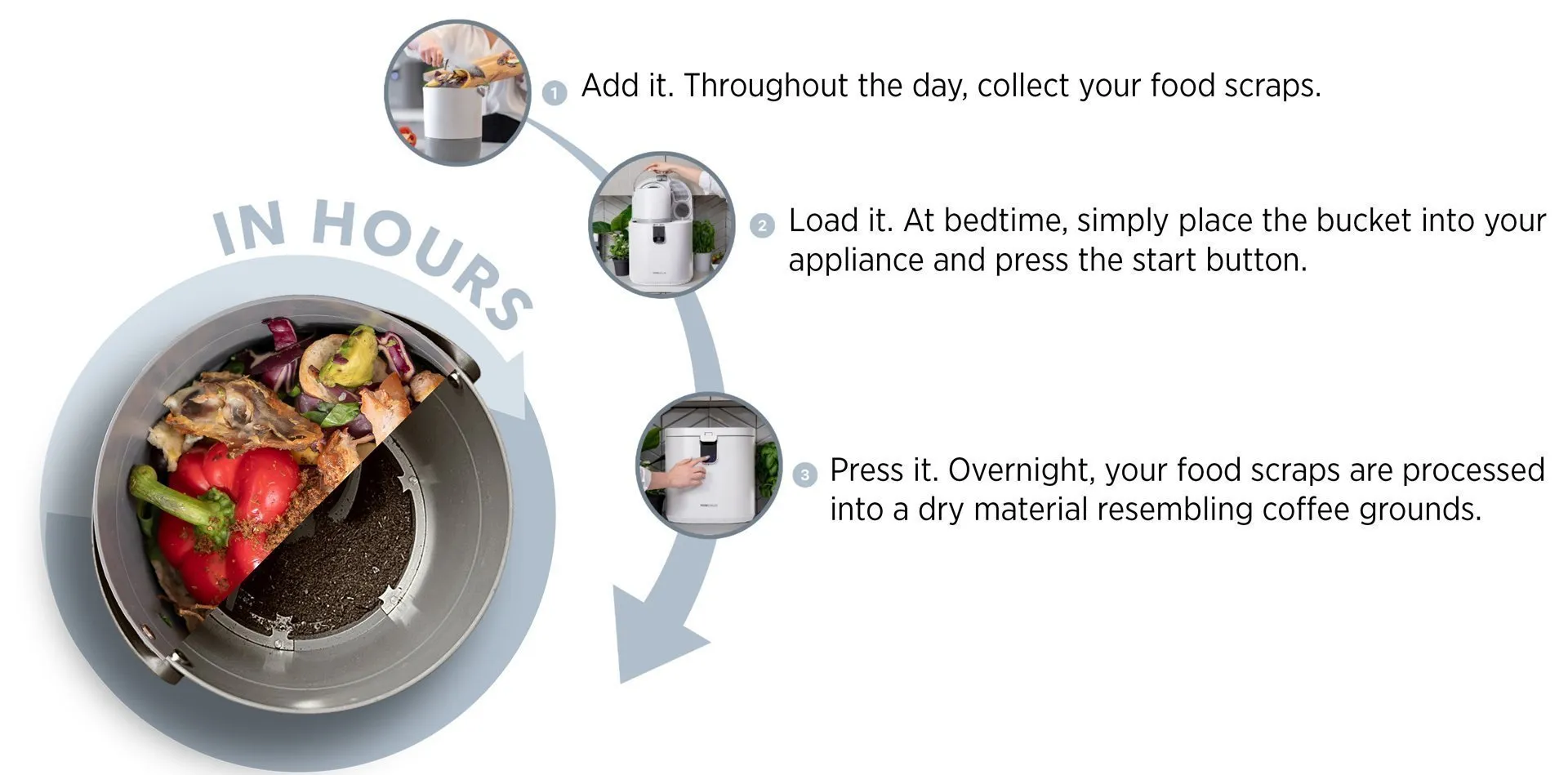
Food waste stinks. We can fix that! FoodCycler® is a countertop appliance that grinds and dries your food scraps. At the touch of a button, it reduces the volume of your food scraps by 90% and creates a nutrient-rich material you can use in your backyard compost, lawn, or garden.

The Future of Food Waste Starts in Your Kitchen

Ready to transform the way you think of food scraps? FoodCycler® is a countertop appliance that grinds and dries your food scraps. At the touch of a button, FoodCycler uses patented Vortech™ grinding and heat-treatment technology to transform your leftovers and trimmings into a dry, nutrient-rich material called Foodilizer®. You can use your Foodilizer as an additive to your backyard compost, lawn, or garden. You can also bring it to a local drop-off or community garden that accepts food waste.

  • Reduce your food scraps by 90% with the touch of a button.

  • De-stink your trash and say goodbye to kitchen flies and trash bin pests.

  • Make an additive for your backyard compost, lawn, or garden.

  • Bring it to a local drop-off or community garden that accepts food scraps.


  • This FoodCycler is the best kitchen product I have ever purchased. It has significantly reduced the amount of garbage produced by our household. Our garbage no longer has smelly rotting food that attracts bugs. No more fruit flies. I recommend it for everybody.

  • Avatar.png

    Bernice A.
    New Hampshire


Casella FoodCycler® infographic illustrating the three-step process: collect food scraps, load the appliance at night, and transform waste into nutrient-rich material by morning.

Frequently Asked Questions

Where can I set up my FoodCycler?

You can set it up in just about any covered area with access to an outlet. The FoodCycler must be in a closed, dry environment where there is no risk of it being rained on or otherwise subjected to the elements. Possible locations include your kitchen, basement, or heated garage. Please see the helpful guides section for the Residential Guide.

What should I cycle?

The best cycle is one with a lot of variety. Please see the helpful guides section for a general list of what you can and cannot process in the FoodCycler.

What comes out of the FoodCycler? And what can I do with it?

After you run your FoodCycler and open the lid, you’ll see that your food waste has shrunk by about 90% and now resembles dry coffee grounds. We call this material Foodilizer®. It is not compost, but it can be used as an ingredient for producing great compost.

You have lots of options for what to do with your Foodilizer:

• Add it to your existing backyard composter if you have one, or bring it to a neighbor who composts. Follow your normal backyard composting routine, treating Foodilizer like food scraps.

• Apply it to your lawn by lightly broadcasting it across the grass.

• Apply it to a garden bed. Food Cycle Science recommends an application rate of one part Foodilizer ft every 10 to 20 parts soil. In general, apply more Foodilizer if you have a mostly vegetarian diet, and less if you have a more omnivorous diet. Till your Foodilizer into the soil 4 weeks before planting seeds or transplants. For a deeper dive, click here.

• No garden or lawn? No problem! Bring your Foodilizer to a local drop-off or community garden that accepts food waste. And don’t worry! Time is on your side – since the material is shelf stable, you can hold onto it for several weeks, or even longer, as long as you keep it dry. Learn more in our Resident Guide.

How long does the FoodCycler process take?

In the FoodCycler Eco 5®, it typically takes between 4 and 9 hours for the food waste to become completely dehydrated and processed. The time needed depends on the amount of food waste being processed, the density of the food waste, and the moisture levels contained in each food item. It takes the unit less than a half hour to cool down, on average.

How much energy does the FoodCycler consume?

Each cycle consumes approximately 1.5 kWh, roughly equivalent to having a desktop computer run for the same amount of time as the cycle. Depending on where you live, using the FoodCycler regularly should not cost you more than $2 to $4 per month. The FoodCycler has built-in sensor technology that monitors the dryness and humidity of the food waste. Once the cycle is complete, the unit will stop automatically.

How long will my filter last?

Each carbon filter lasts between 3 and 6 months, or 500 cycle hours, with regular use. As a customer, you will receive a full year’s supply of filter media with your FoodCycler. After the first year, you will receive filter media refills by mail. To request an earlier refill, reach out via our app or email. The life expectancy of each carbon filter is determined by both the moisture content of the food waste and the natural odors of the food waste. Denser, wetter, and smellier food wastes will go through filters faster than simple veggie scraps and eggshells. The filter light sensor is a guide only: The best indication of whether your filter requires replacement is odor. Please see your device manual for instructions to reset the filter light.

What are the terms and conditions?

Click here to view the terms and conditions.

What does it cost and what do I get?

Unburden your bin and potentially save on your monthly trash service: You’ll receive carbon refills and a risk-free warranty for just $19.99/month. Join the thousands who have discovered all the benefits of a better food waste solution. FoodCycler by Casella residential customers pay only $19.99/month and a one-time $50 setup fee. This amount includes the appliance, the countertop bucket, quarterly replenishment of carbon filter pellets, ongoing customer support, and a full product warranty*. *The full product warranty covering manufacturing defects and performance issues is active for the entire duration of your service subscription, provided the unit is used as directed in the accompanying user manual. However, please be advised that the warranty may become void if the unit is misused, altered, tampered with, or disassembled. Misuse includes but is not limited to using the unit for purposes other than food waste recycling, operating the unit outdoors, or using unapproved accessories. Any attempt to repair or modify the unit, or any use of the unit in a manner contrary to the instructions provided, may result in voiding the warranty. In such cases, the unit's return and/or repair will be subject to charges at our discretion. We encourage our customers to reach out to our dedicated customer support team at casella@foodcycler.com with any concerns or questions regarding the proper use of the FoodCycler unit to ensure a satisfying and trouble-free experience.

Does FoodCycler have a good carbon footprint?

Yes. When you and your neighbors make the switch to FoodCycler, you can reduce the carbon footprint of your food waste. The appliance uses electricity (about 1 to 1.5 kilowatt hours of electricity per cycle), which does produce emissions, but these emissions are quickly offset by reductions in disposal and trucking. Every community is going to be a little different in the specifics. Managing your food scraps at home prevents disposal emissions and helps to build soil carbon. If you’re able to reduce your trash pickups, it can also reduce trucking emissions. In one community, using EPA factors, we have estimated that managing household food waste onsite with FoodCycler can reduce emissions by approximately 85% compared with traditional disposal.

Is FoodCycler good for my community?

With FoodCycler, you’re taking care of your food scraps locally. Once your food waste has been processed into a dry, shelf-stable material, you have a lot more choice in how to manage it. You can keep it around longer and it will be easier to transport. Just keep it dry. So, what can you do with it? If you have the space, you might decide to compost it in your backyard and use it in your garden. You might share it with a neighbor or walk it to a community garden. Or you might bring it to a town drop-off or farmer’s market collection point so it can make its way to local compost sites. Our hope is that every community will find its own unique combination of opportunities to use FoodCycler in support of local food programs, urban farmers, community gardens, school garden clubs, and other worthwhile organizations.

How does FoodCycler line up with sustainability at Casella?

Casella has a long-standing commitment to sustainability. We have been collecting recyclables since the 1970s and sourcing separated food waste since the 1990s. But household food waste collection has not become as popular as many of us would have hoped. With FoodCycler, we hope to see dramatic increases in food waste recovery and household participation. Our 2030 Sustainability Goals include working towards reducing emissions, improving fuel efficiency, and recovering more material from the disposal stream. Learn more at our Sustainability Report.

Helpful Guides

Benefits, acceptable list and resident guide.

Acceptable List
You’ll be amazed at all the types of food you can feed your FoodCycler Eco 5.

Resident Guide
Want to learn more? Take a sneak peek at the Resident Guide you’ll receive when you receive and unbox your very own FoodCycler.

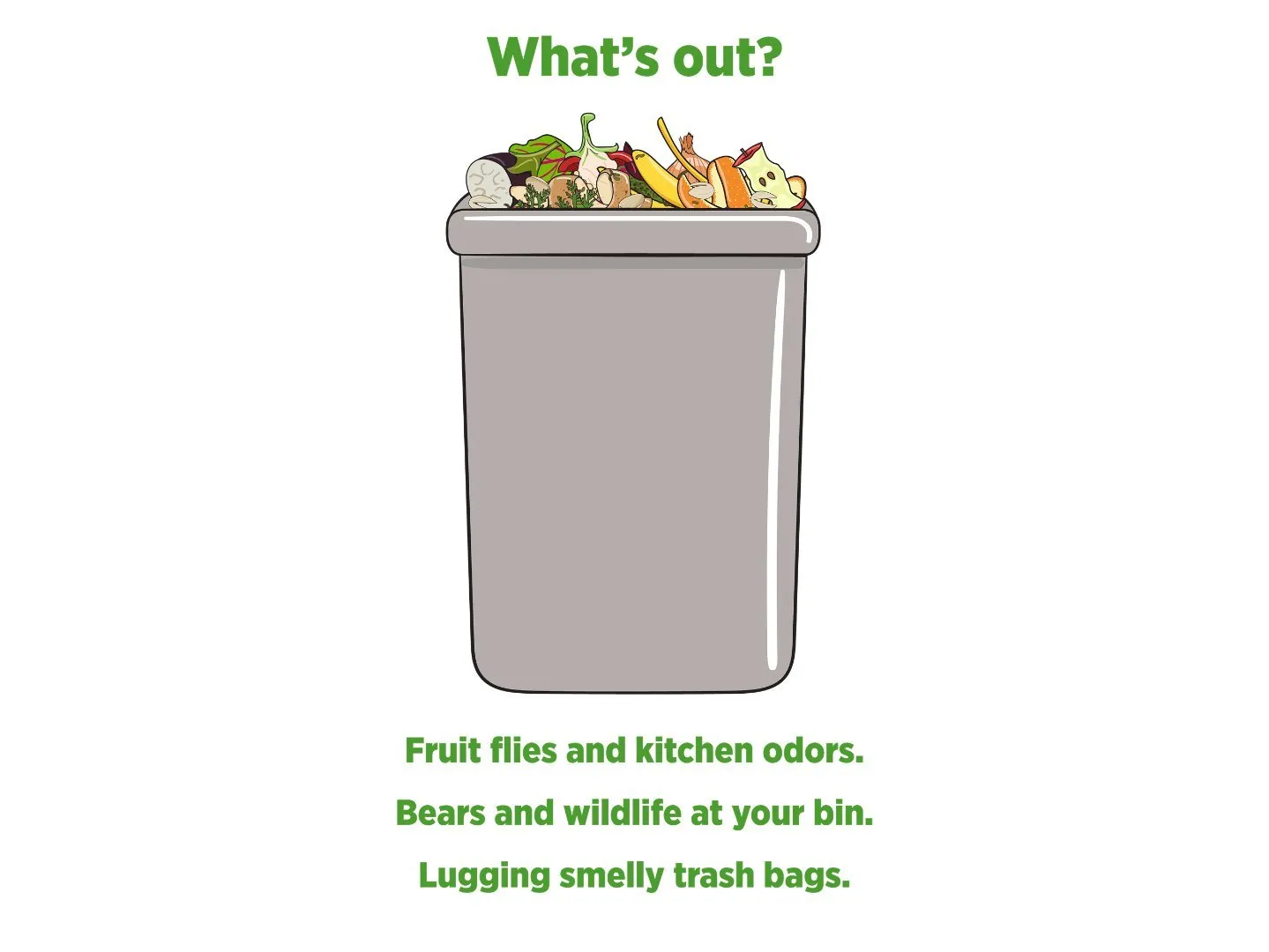
What's Out

  • Fruit flies and kitchen odors

  • Bears and wildlife at your bin

  • Lugging smelly trash bags

What's In

  • Fruit flies and kitchen odors

  • Building healthy soil

  • Protecting our climate

Download Acceptables Poster

Resident Guide PDF

Casella FoodCycler® bucket filled with processed compost material.